
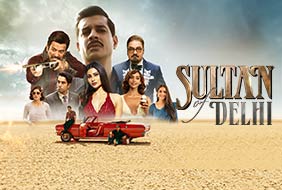
Sultan of Delhi
No. of Episodes
9
Duration
30 / 60 mins
Genre
Crime | Action | Drama | Thriller
A teenage refugee from Partition-ravaged Lahore transforms into 1960s Delhi's most powerful illegal arms dealer, navigating dangerous alliances and brutal rivalries in his ruthless climb to power. As friendships fracture and enemies multiply, he must decide whether wealth and dominance are worth sacrificing the last remnants of his humanity. Can an orphan forged in violence become the Sultan of Delhi or will ambition consume what little conscience he has left?
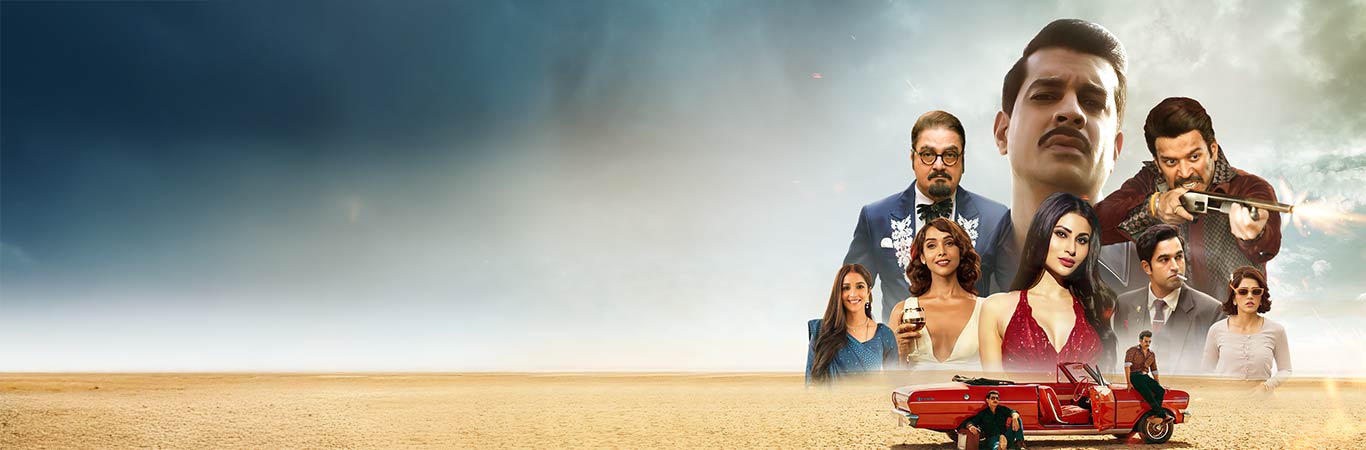
Sultan of Delhi is a period crime thriller that chronicles the violent rise of Arjun Bhatia from a Partition refugee to Delhi's most powerful arms dealer during the turbulent 1960s. Directed by Milan Luthria and based on Arnab Ray's novel "Sultan of Delhi: Ascension", this nine-episode series attempts to capture the gritty underworld machinations that shaped the capital's criminal landscape in the decades following Independence.
The story begins in 1947 as the horrors of Partition devastate the Indian subcontinent. Young Arjun Bhatia arrives in Delhi as a traumatized child with his father, having fled Lahore after losing most of his family to the communal violence that accompanied the division of India and Pakistan. The overnight descent from comfortable affluence to desperate poverty in a refugee camp fundamentally transforms Arjun's worldview. The lessons he learns amid the deprivation and brutality of camp life forge him into an amoral survivor who understands that in this new world, only the ruthless prosper.
The narrative then leaps forward to the 1960s where we meet adult Arjun (Tahir Raj Bhasin), now working for Jagan Seth (Vinay Pathak), Delhi's premier illegal arms dealer. Jagan operates a vast criminal enterprise that supplies weapons to various factions across North India, exploiting the political instability and regional conflicts that provide steady business for those willing to traffic in death. Under Jagan's tutelage, Arjun learns the intricacies of the arms trade—the supply chains, the political connections necessary for protection, the violence required to maintain territory and eliminate competition.
Arjun forges a fast friendship with Bangali (Anjumm Shharma), a fellow operative in Jagan's organization. Their bromance becomes the series' emotional core as the two men navigate the treacherous world of gun-running together, covering each other's backs in dangerous situations and sharing both triumphs and setbacks. The camaraderie between Arjun and Bangali provides moments of humanity amid the violence and moral compromise that defines their profession.
Romance enters Arjun's life through multiple women who complicate his single-minded focus on accumulating power and wealth. The series introduces Nayantara (Mouni Roy), Bangali's wife who first appears performing a cabaret number that exists primarily in a filmmaker's fantasy rather than historical reality. These romantic entanglements add texture to Arjun's character, revealing vulnerabilities beneath his hardened exterior and forcing him to consider whether human connection matters more than power.
The primary antagonist is Rajender (Nishant Dahiya), who emerges as Arjun's most dangerous adversary. Rajender is both viscerally contemptuous of Arjun and visionary enough to see how the gun-running racket will evolve as India's political landscape shifts. Nishant Dahiya delivers the series' standout performance as Rajender—an odious, ruthless operator whose petty enough to target Arjun's girlfriends in revenge but strategic enough to anticipate market changes before others recognize them. Dahiya brings perfect casting to a character who becomes instantly relatable precisely because his villainy springs from recognizable human jealousy and ambition.
Backing Rajender is Shankari (Anupriya Goenka), whose character borders on parody. Having barely aged a day since we first meet her decades earlier (a continuity problem the series never addresses), Shankari serves as Rajender's advisor—a vazir to his princeling. She bends his ear at crucial moments, hatches deals mid-intercourse and provides the strategic thinking that complements Rajender's raw ambition. Composer Daniel B George creates an evil laugh music cue specifically for Shankari that becomes the most entertaining aspect of this borderline cartoonish vamp character.
The series explores Arjun's methodical rise through Delhi's criminal hierarchy. He proves himself indispensable to Jagan through increasingly audacious operations that eliminate rivals and secure new supply channels for weapons. However, Arjun's success breeds resentment among those who were established in the organization before his arrival. The tension between Arjun as the ambitious outsider and the old guard who feel threatened by his rapid ascent creates internal conflict that makes the criminal enterprise as dangerous from within as from external law enforcement.
Milan Luthria brings his signature directorial style—previously seen in Once Upon a Time in Mumbai, Baadshaho and The Dirty Picture—to this OTT debut. His tendency toward aphorism-addicted heroes, dapper villains and oomph-oozing women fits the material's aspirations toward 1970s Bollywood aesthetics. The series deliberately evokes that era's cinematic language, complete with stylized violence, romantic interludes that pause the plot and dialogue heavy with pronouncements about fate, ambition and betrayal.
However, this stylistic choice becomes a liability. What worked as homage in Milan Luthria's best films feels tired and derivative here. The series runs on overly familiar genre tracks—the orphan who rises through crime, the loyal friendship tested by circumstances, the romantic complications that humanize the antihero, the climactic betrayals that set up future conflicts. Sultan of Delhi offers nothing fresh or insightful about this well-worn narrative territory.
The production values reflect the series' period setting through costume design and some effective location work. Shooting across Delhi and recreating the 1960s requires attention to visual details—the cars, the clothes, the architecture—and the series generally succeeds in creating a believable historical milieu. However, the action sequences lean heavily into the over-the-top flourishes that characterized the 1970s films the series emulates, which creates tonal inconsistency with the grittier crime drama the story sometimes aims to be.
Tahir Raj Bhasin works hard in the lead role, bringing physical intensity to the action sequences and emotional layers to Arjun's quieter moments. However, multiple critics noted that the character doesn't quite fit him as well as it should. Between the bad mustache, questionable haircut and lack of gravitas required for someone meant to dominate through sheer presence, Bhasin struggles to completely embody the larger-than-life criminal kingpin the story needs him to be. He delivers a solid performance, but solid isn't enough when the character demands something iconic.
The supporting cast fares unevenly. Vinay Pathak brings veteran authority to Jagan Seth, though the character remains somewhat underwritten. Anupriya Goenka commits fully to Shankari's outrageousness, making her memorable even when the character teeters toward camp. Harleen Sethi, so nuanced in Kohhra, is wasted as Preeti, Arjun's friend from the refugee camp whose potential for interesting character development goes unrealized.
Critical reception has been decidedly mixed. Reviews praised individual performances and moments of effective tension but found the overall package derivative and overlong at nine episodes. The series' tendency toward shouty flourishes and melodramatic excess makes what should be a tense crime thriller feel exhausting rather than exciting. The most common criticism centered on familiarity—this is an extremely well-trodden path in Indian crime cinema, and Sultan of Delhi brings no fresh perspective or innovation to justify another journey down it.
The series builds toward a climax that ends as predicted, with betrayals and power shifts setting up a second season. That final setup suggests more adventures in this contemporary version of the Delhi Sultanate, though whether audiences will return for additional helpings of such familiar material remains uncertain.
Sultan of Delhi ultimately represents a competently made but uninspired crime drama that mistakes style for substance. It has the production values and occasional flashes of quality that prevent it from being unwatchable, but lacks the vision or originality that might have elevated it beyond mediocrity. For viewers seeking atmospheric period crime drama and willing to overlook derivative plotting, it offers adequate entertainment. For those hoping Milan Luthria's move to streaming would yield something fresh and compelling, Sultan of Delhi disappoints—a ruler without a kingdom worth conquering.
 April
April